IoT Sensors in Smart Farming
Real-Time Field Intelligence for the Modern Farmer
What Are IoT Sensors?
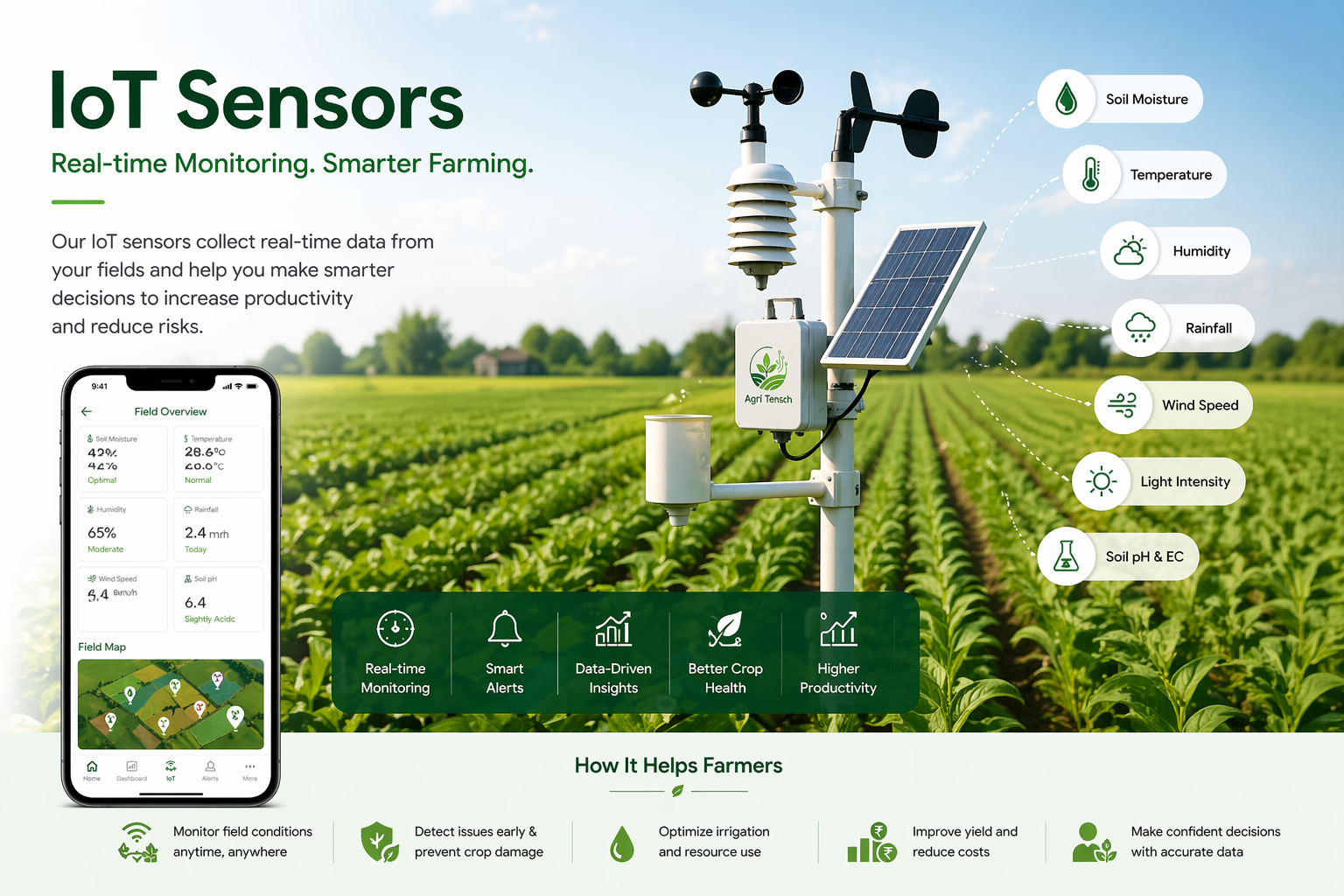
IoT (Internet of Things) sensors are compact smart devices installed in the soil or mounted around the field. They continuously collect critical farm data and transmit it wirelessly in real-time to a smartphone app or cloud dashboard — letting farmers monitor their entire field without stepping outside.
IoT Sensor Types & Functions
Soil Moisture Sensor
Measures water content in the soil to find the precise irrigation moment — preventing over-watering and drought stress.
Temperature Sensor
Tracks soil and air temperature in real-time, triggering crop-stress alerts during extreme heat or cold spells.
pH Level Sensor
Monitors soil acidity and alkalinity continuously so farmers apply the right fertilizers for optimal crop growth.
Humidity & Air Sensor
Measures atmospheric humidity and air quality to predict disease risk, fungal outbreaks, and pest activity.
Light Intensity Sensor
Tracks sunlight exposure across farm zones to optimize crop placement and greenhouse lighting schedules.
How It All Connects
Each sensor transmits data via WiFi, LoRa, or Zigbee to a central gateway, which forwards it to the cloud. The smart farming app then displays live readings, triggers alerts, and uses AI algorithms to recommend actions — turning raw sensor data into smart farming decisions.